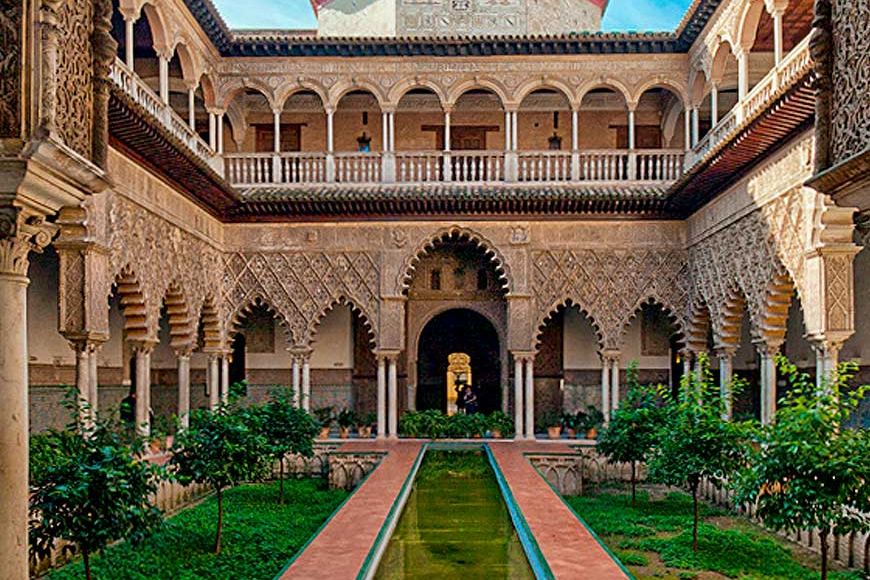
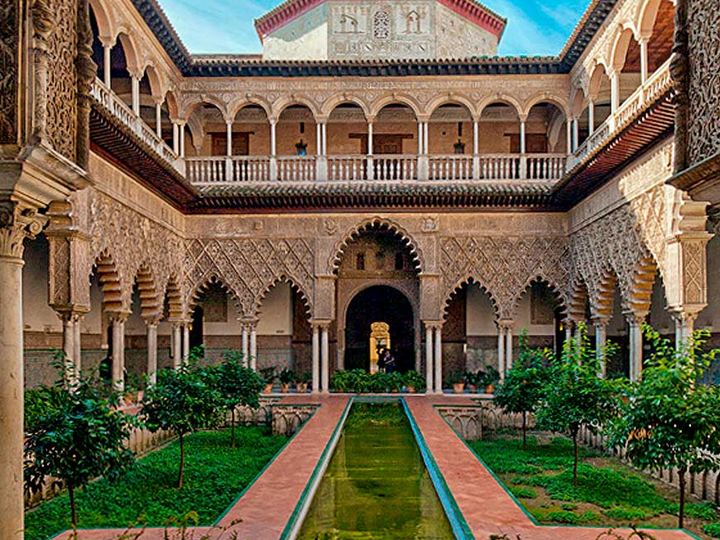
Seville has three World Heritage monuments (the Cathedral, the Royal Alcázar and the Archivo de Indias) and one of the largest historic centres in Europe. Start with these six must-sees and carry on with the full list: for each one you have the address and a page about its history.
3 World Heritage monuments
With addresses
Historic centre on foot
Must-sees
The 6 must-sees
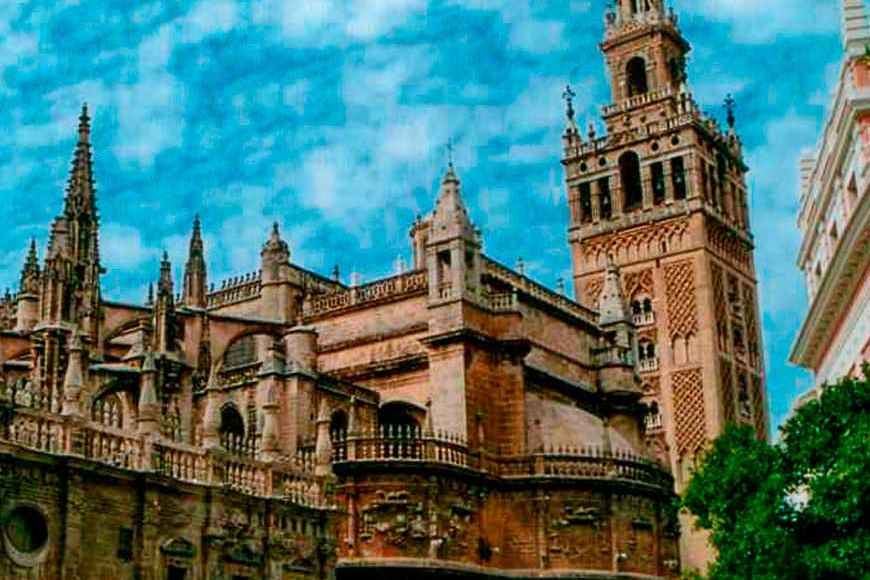
Plaza Virgen de los ReyesThe Cathedral and the Giralda
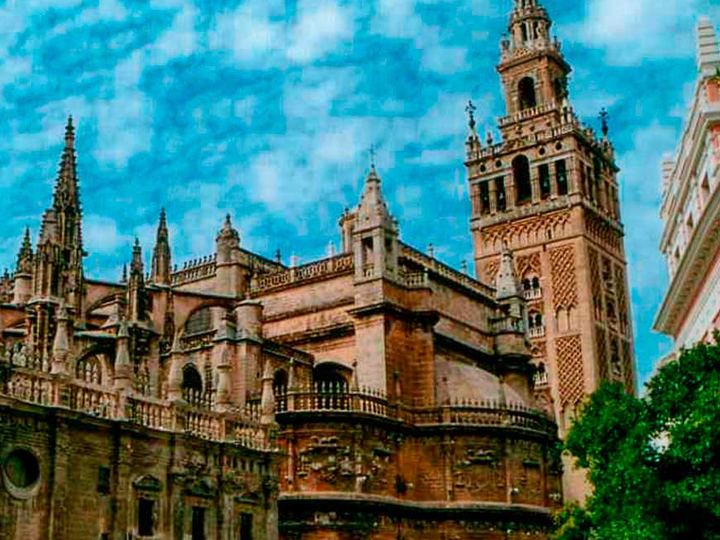
The largest Gothic cathedral in the world by area, built on the site of the great mosque. It preserves the mosque's minaret, the Giralda, and the Patio de los Naranjos, and holds the tomb of Christopher Columbus.
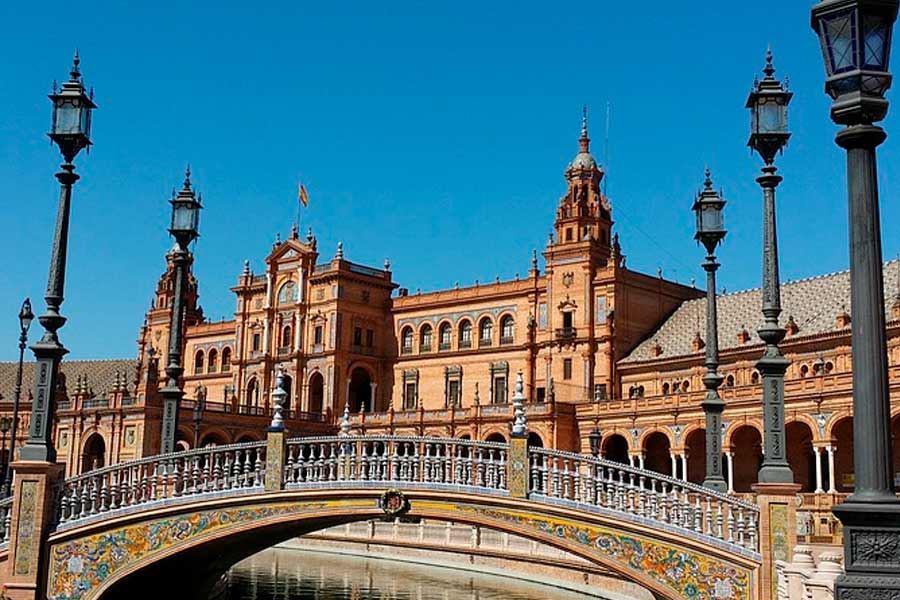
Avenida de Isabel la CatólicaPlaza de España and María Luisa Park
The great setting of the 1929 Ibero-American Exposition: the Plaza de España with its tiled benches, the Plaza de América and the pavilions in the park.
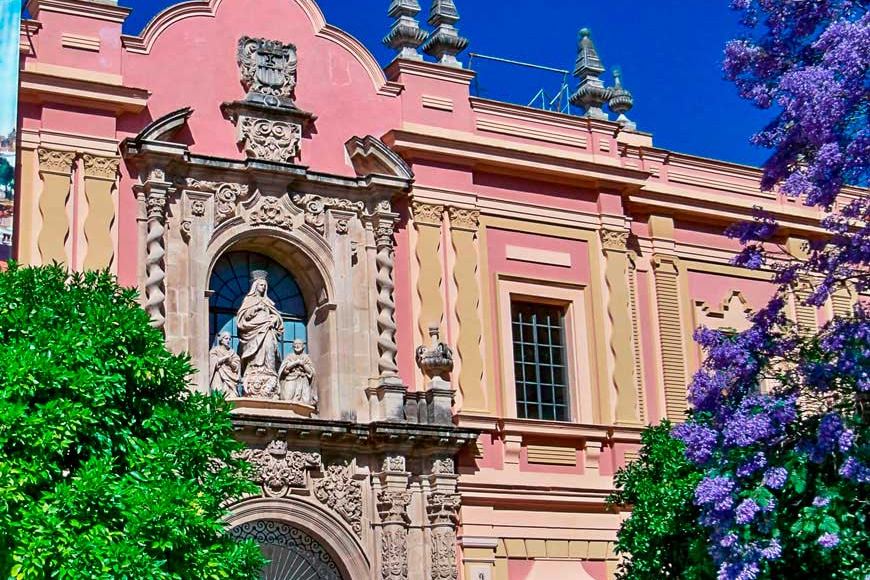
The Archive of the Indies, built in the 16th century, takes us into Spanish Renaissance art. It is one of the most important document centres in existence, devoted to the discovery and conquest of the New World.
The façade facing Plaza de San Francisco has doors and windows decorated with medallions of mythological and historical figures. The pilasters are adorned with floral sprays and grotesques.
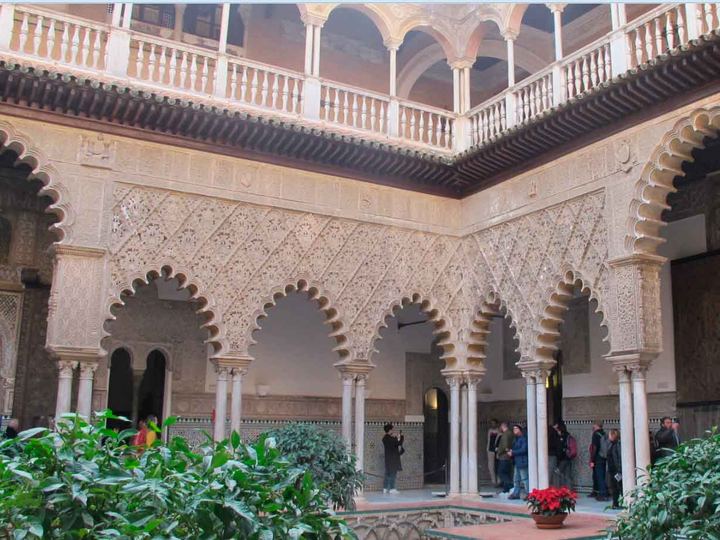
The Casa de Pilatos, or Medinaceli Palace, is a palace in Seville (Andalusia, Spain) built in a blend of the Italian Renaissance and Spanish Mudéjar styles. It is considered the prototype of the Andalusian palace.
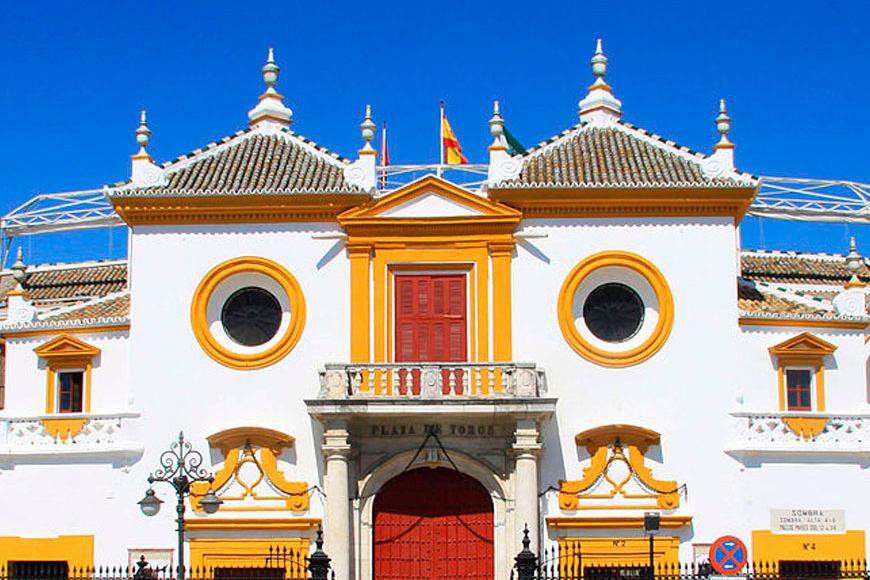
On this site since 1852. The beauty of many of its funerary monuments, such as the one erected in honour of the famous bullfighter Joselito "el Gallo" by the Valencian sculptor Mariano Benlliure, lightens the funereal atmosphere of the grounds.
They are located in the very heart of the San Vicente district, between calle Baños and calle Miguel Cid, next to the Chapel of the Dulce Nombre de Jesús, which belongs to the Hermandad de la Vera Cruz brotherhood, co-owner of the Baths.
Between calle Baños and calle Miguel Cid · San Vicente district
The statue dedicated to the painter Zurbarán stands in the Plaza de Pilatos. It was made in 1929 by Aurelio Cabrera Gallardo. It originally stood in the María Luisa Park and was moved to its current location in 1950.
The Archaeological Museum of Seville stands opposite the Museum of Popular Arts and Customs (the former Mudéjar Pavilion) and next to the Royal Pavilion, all in the Plaza de América (popularly known as the “Plaza de las Palomas”, Pigeon Square), which in turn lies in the…
Plaza de América ("Plaza de las Palomas") · María Luisa Park
It is one of the most representative buildings in Seville. At its entrance, a series of important figures from Seville's history (writers, politicians, sculptors) welcome the visitor: "Fray Bartolomé de las Casas", "Per Afán de…
The Royal Shipyards (Atarazanas Reales) of Seville were built very shortly after King Ferdinand III of Castile took the city from the Muslims (1248), when his son Alfonso X decided in 1252 to build Royal Shipyards for the…
C/ Temprado, 1, on the corner of calle Dos de Mayo, behind the Teatro de la Maestranza
The Teatro Lope de Vega in Seville stands on the Avenida de María Luisa (next to the María Luisa Park). It was built in 1929 to a design by the architect Vicente Traver y Tomás and, together with the Casino, formed the Pavilion of the City of…
The Triunfo monument, erected in thanksgiving because the terrible earthquake of 1755 caused so little damage, gives its name to the square where it stands.
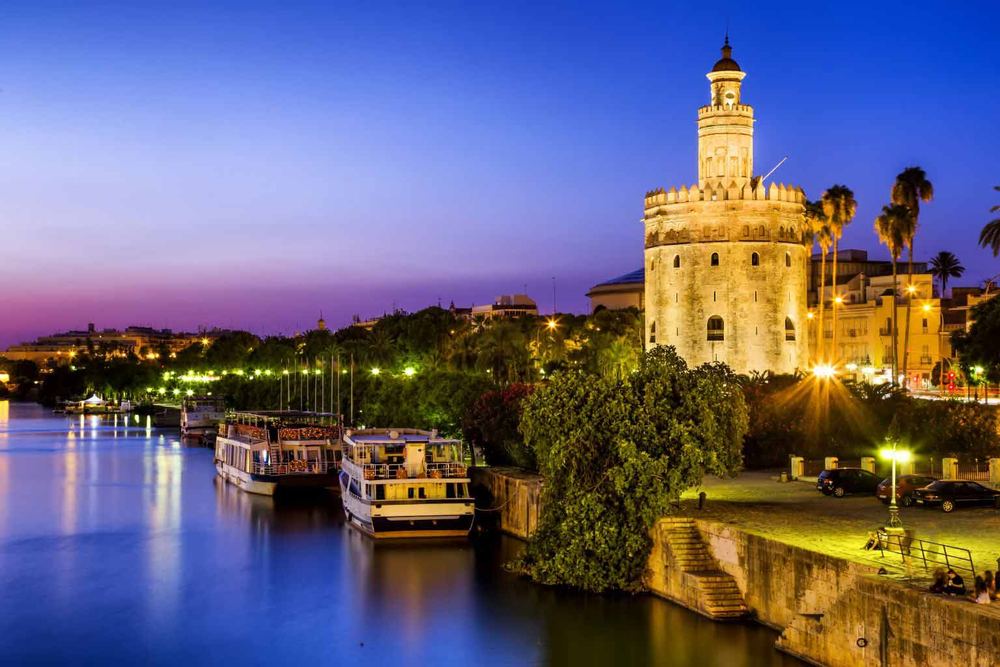
A small hexagonal tower which, together with the Torre del Oro and the Torre de la Plata, strengthened the wall linking the Alcázar with the port. Today it is half hidden by the building it adjoins.
Corner of Avenida de la Constitución and calle Santo Tomás
From a height of 45 metres, the Camera Obscura in the Torre de los Perdigones offers views of the old walled city, beside the Guadalquivir and close to the Isla de la Cartuja.
The Hospital de la Caridad in Seville, located in the Arenal district very close to La Maestranza, is home to the Brotherhood of the same name and is an architectural and artistic ensemble that is a pinnacle of Spanish Baroque art.
Calle Temprado, 3
With an official guide
Would you rather see them with an official guide?
The guided visits include tickets and save you from queuing.
The Cathedral and the Giralda, the Royal Alcázar, the Santa Cruz quarter, the Plaza de España and María Luisa Park, the Torre del Oro and a stroll around Triana. With the Cathedral and Alcázar tour you see the first two in one morning.
How many days do you need to see Seville?
With two full days you can see the major monuments; with three or four, you can add museums, neighbourhoods such as Triana or La Macarena and a day trip or two, such as Itálica or the Alhambra.
Which monuments are World Heritage Sites?
The Cathedral, the Royal Alcázar and the Archivo de Indias, inscribed together by UNESCO in 1987.