March
- Holy Week
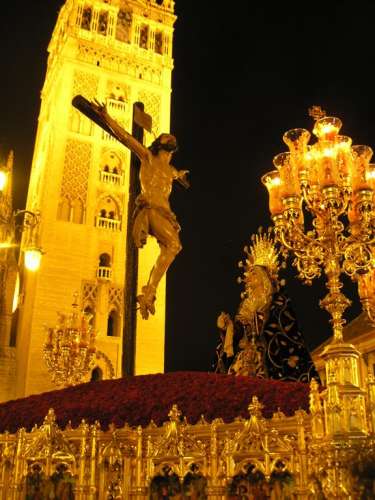
It is a festival of its own whose origins go back to the 16th century, when scenes from the life and death of Christ were first enacted in the streets to the amazement of the people. Since then they have been popular expressions of religious devotion.
These Brotherhoods are devoted to the divine worship of Our Lord Jesus Christ and His most beloved Mother, the Virgin Mary, as well as to the personal and collective promotion of the teachings of Holy Mother Church. They also carry out other apostolic activities, namely initiatives for evangelisation, works of piety or charity, and enlivenment in a Christian spirit.
They originated in the old guilds or lay associations of workers whose religious devotion was usually centred on the same religious figure, led and driven by an individual or, in some cases, by the monk, friar, priest or parish priest of the parish where the brotherhood was born. Their aim was to contemplate the Passion and Death of Christ and imitate it through acts of penance, that is, through pain, affliction and penitence. Associations arose for bakers, for slaves, for Catalan linen merchants, knights, carters, squires, clergymen, soldiers and so on.
In the city of Seville there are more than 50 brotherhoods that carry more than 100 pasos (floats) in procession.
They begin on Palm Sunday at midday with the procession of the Borriquita, made up mostly of children, followed by other brotherhoods carrying one, two or three floats borne by costaleros, in an organised parade with set timetables to make their station of penance at the Cathedral. Every day around midday the various brotherhoods set out on their station of penance, each representing different scenes from the Passion and Death of Jesus Christ, until the early hours of Easter Sunday, when only one brotherhood processes, carrying an image representing the Resurrection of Jesus Christ and the Virgen de la Aurora, the grand finale to this long and intense week.
During this week, in the mornings, people visit the churches of the brotherhoods that process that afternoon, and on Maundy Thursday they visit the Tabernacles and attend the Holy Week services. Women dress in mantillas, people go to the Miserere and listen to saetas... the streets fill with people and processional marches, while the floats, accompanied by their brotherhood members, make their station at the Holy Cathedral Church.
Today in Seville, the Church and the Holy Week brotherhoods carry out a spiritual, social, charitable and cultural role throughout the year.
- Easter Sunday
The season opens at the bullring of the Real Maestranza de Caballería de Sevilla, which has the honour of being one of the cathedrals of bullfighting. Its history is linked to the conquest of the city by Ferdinand III in 1248, as it was the meeting place of the Brotherhood of San Hermenegildo.
The leading bullfighting figures in history have passed through this ring. It is one of the most important bullrings nationally and internationally; in fact, some say that until a bullfighter has been carried out through the Puerta del Príncipe, he cannot be considered an established matador.
April
- The Seville Fair
Right after Holy Week, in the middle of spring and always in April, two weeks later, the people of Seville get ready for the "April Fair". The setting-up of this ephemeral town begins six months in advance.
It dates back to 1846, as a fair for buying and selling livestock, when two merchants of Basque and Catalan origin, Narciso Bonaplata and José María de Ybarra, signed a proposal requesting permission to hold this annual fair. Today only a few traces remain, such as the bullfights and the horse rides around the Real de la Feria (fairground).
Over time it has become, together with Holy Week, one of the two most significant and representative festivals of the city.
It was originally held on the Prado de San Sebastián, but in the late 1960s it moved to the Los Remedios district, where it covers an area of over one million square metres with just over 1,000 casetas (marquees), most of them private, others belonging to associations, organisations, companies, etc. It is advisable to go with Sevillians, since not only do they make it easier to get into the casetas, but thanks to their hospitality they will show us the different habits and customs in the casetas of friends and family.
Each year a gateway is created inspired by one of the city's emblematic monuments, decorated by local painters and lit with hundreds of thousands of light bulbs that adorn this main entrance to the fairground, switched on on Monday at midnight. Its lights can be seen at night from several kilometres around.
The casetas are set up and decorated with paper lanterns, lace fabrics, ornamental mirrors, paper flowers, console tables, light bulbs, boards, counters, paintings, mirrors, lamps and scenery, while people sing, dance and drink manzanilla, so that on opening day this temporary caseta becomes an extension of everyone's home and stands out from the rest of the fairground, perhaps even winning one of the prizes for the best-decorated caseta.
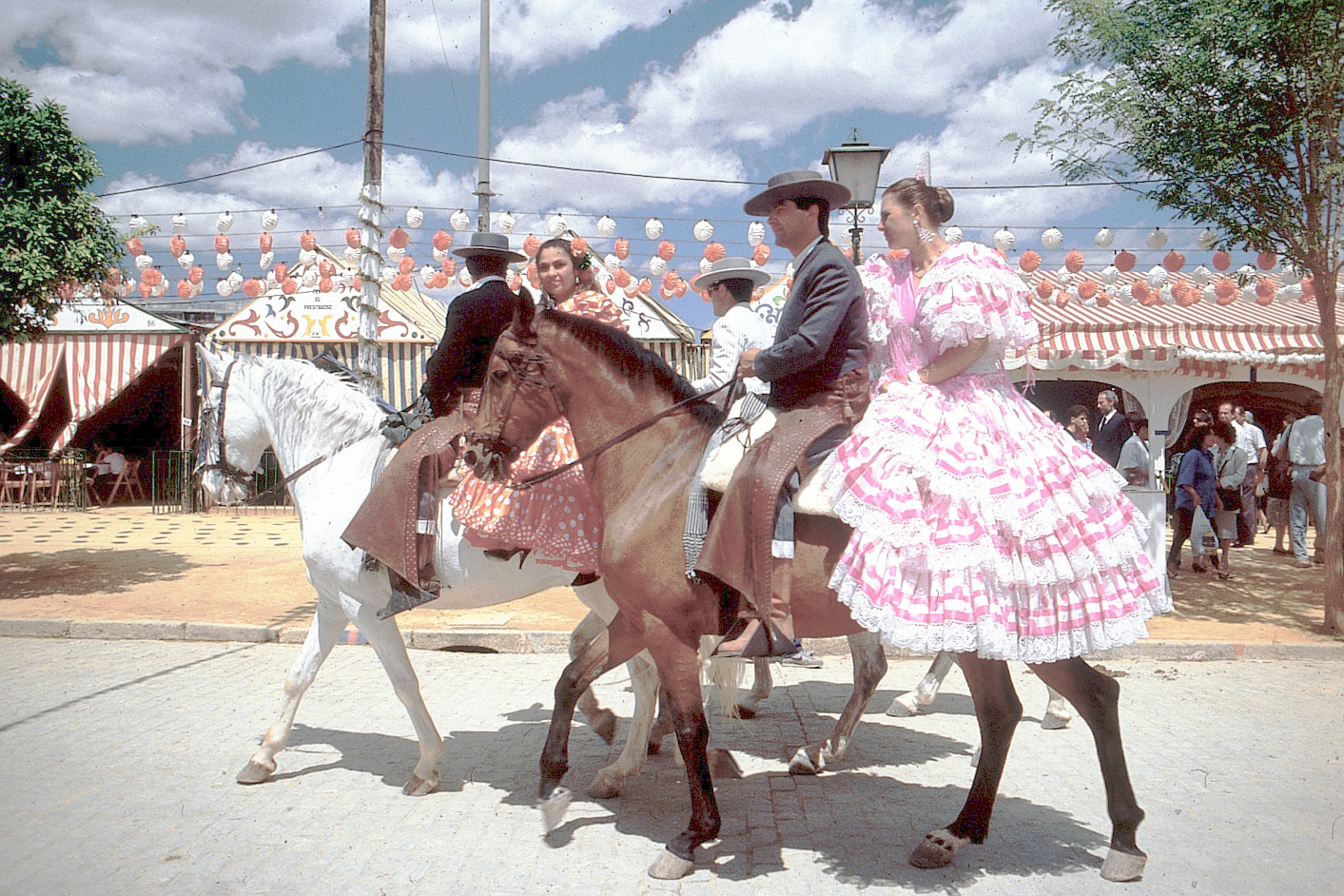
When fair week arrives, the casetas are never without pescaíto frito (fried fish), caldito (broth) and ham, along with manzanilla or fino. There is dancing, singing and conversation among friends and acquaintances who gather for a week and make this fairground their own home. The quintessential women's attire is the traje de faralaes or gitana (flamenco dress), the regional costume that forms one of the most popular images of Seville.
During the day, people enjoy not only sevillanas, flamenco, fino and manzanilla but also the horse parade until 20:00, in which riders mount impressive horses, alongside horse-drawn carriages and various kinds of turnouts carefully prepared to show off their finest traditional trappings.
Visit Seville
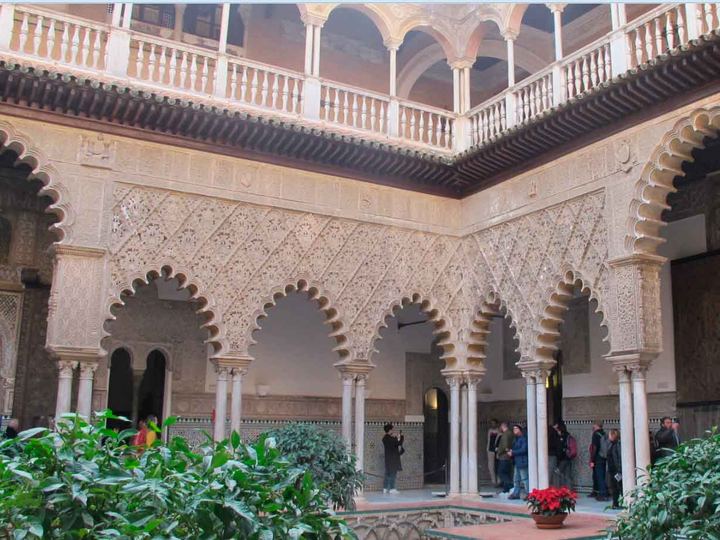
Guided tour of the Cathedral, the Giralda and the Royal Alcázar
Seville's two must-sees with the same official guide and tickets included.
from€65per person
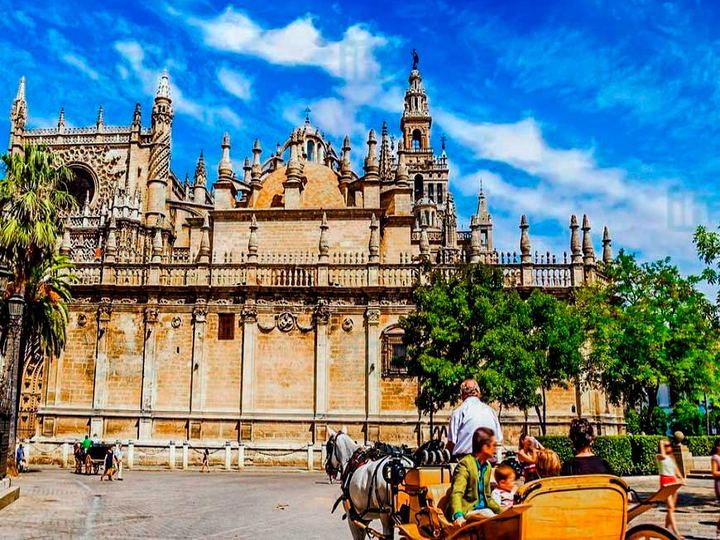
Essence of Seville: horse-drawn carriage ride
Plaza del Triunfo, Torre del Oro, María Luisa Park and Plaza de España in a horse-drawn carriage.
Free, no-obligation quote