May
- The May Crosses
The youngest children organise the May crosses, an imitation of a brotherhood procession made by themselves with the traditional image of a cross, where they play at being grown-ups with costaleros, foremen and drums, parading through the neighbourhood and asking passers-by for a donation to keep this lovely tradition going.
- El Rocío
The date of Pentecost Sunday varies, as it depends on the dates of Holy Week, and it can fall in May or June.
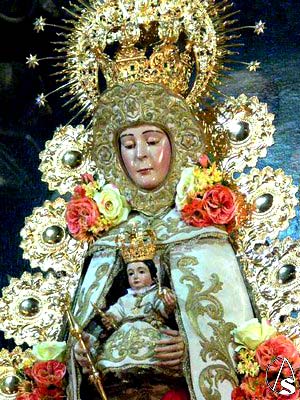
The Romería del Rocío is a religious pilgrimage dedicated to the Virgen del Rocío which has undergone some changes over time, though its essential content remains the same. This pilgrimage is the most important event of the Rocío year. It is the gathering of the people to celebrate, with Mary, their Mother, the coming of the Holy Spirit.
From the city of Seville five brotherhoods set out on pilgrimage to the village of El Rocío, in Almonte, a town less than 75 km away along the A-49 motorway, towards Huelva.
Seville also watches its five brotherhoods organise their wagons and prepare for the pilgrimage to reach Her.
It has its origin in 1653, when Nuestra Señora de las Rocinas was named patron saint of the town of Almonte and it was agreed to hold solemn festivities with Mass and a sermon.
The pilgrimage begins on the Saturday, the eve of Pentecost, from twelve noon, with the presentation of the affiliated Brotherhoods, 98 in number, which in order of seniority parade before the doors of the Shrine, where they are received by the Mother Brotherhood. During the presentation, each brotherhood is accompanied by pilgrims on foot, on horseback or in decorated wagons, who halt their "Simpecado" banner facing the main door of the Shrine to sing a hymn to the Virgin, thus marking the end of their journey.
The night fills with Hail Marys and Salves, and a litany amid lights and tinkling bells fills the early hours. The railings of the Shrine are privileged witnesses to prayers, pleas, hopes and fulfilled vows, in thanksgiving to María Santísima del Rocío.
In the early hours of Monday, the banner crosses the nave of the church through the crowd of devotees to begin the procession, at an unpredictable time each year.
The Virgen del Rocío stops in front of the brotherhoods' "Simpecado" banners so that Salve after Salve can be prayed to her along a long processional route.
At around two in the afternoon, the Virgen del Rocío passes back through the doors of the Shrine to the acclaim of the pilgrims, at which point the procession and pilgrimage end. From then on the brotherhoods begin the journey home.
- San Fernando
On 30 May, the feast of San Fernando (Saint Ferdinand), conqueror of the city, is celebrated. The King's incorrupt body is displayed in the chapel of the Virgen de los Reyes in the Cathedral: a parade, Mass and a guard of honour by the Corps of Engineers for the occasion.
June
- Corpus Christi
It depends on when Pentecost Sunday falls, as it is celebrated 10 days later. It has no fixed date and can be in May or June.
Its origin lies in the Middle Ages, a time of Eucharistic heresies; to counter this movement, Pope Urban instituted in 1264 the Feast of the Body of Christ, which was confirmed in 1311 by Pope Clement V, who confirmed the feast and introduced the obligation to carry the Sacred Host in a procession.
The streets of central Seville, the balconies and the shop windows of some of its shops are decorated, and altars are set up in the streets along the route of the procession with its Monstrance. From early in the morning there is activity around the Cathedral, with two lines forming on the pavements, and the streets the Blessed Sacrament passes along are strewn with rosemary sprigs, ready for when the Monstrance, images, relics and carts with sacramental plays come out.
The Monstrance is accompanied by the Seises, who dance before it dressed in red and wearing hats. This dance group has its origins in the 15th century; originally the troupe was made up of 6 young boys, although since 1613 there have been 10. They have the papal privilege of dancing with their heads covered. The bells of the Giralda ring out with different peals during the procession, which is made up of various floats, monstrances, religious institutions, brotherhoods, and civil and military representatives.
- Corpus Chico
The following Sunday sees the Corpus Chico of Triana, more popular in character, and the Corpus of the Magdalena, more stately in style.
The Tears of Saint Peter
On the 28th and 29th, at midnight on the 28th and in the morning and at midday on the 29th bugles sound as a reminder of Saint Peter's denials of Jesus Christ and Saint Peter's tears.
Visit Seville
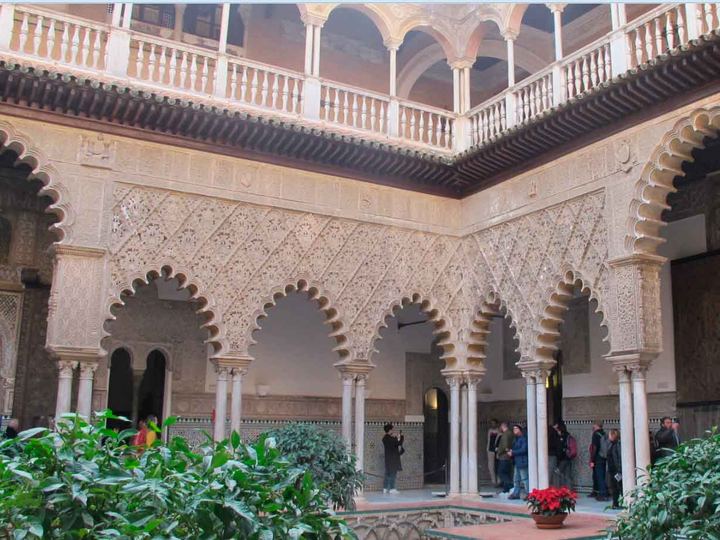
Guided tour of the Cathedral, the Giralda and the Royal Alcázar
Seville's two must-sees with the same official guide and tickets included.
from€65per person
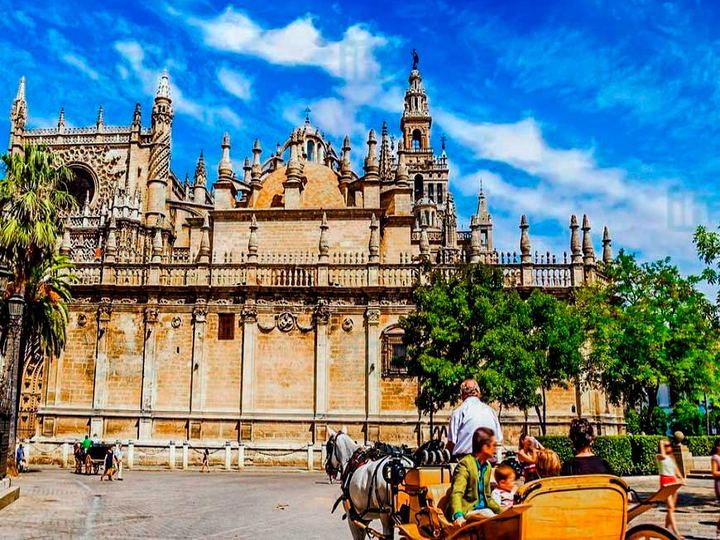
Essence of Seville: horse-drawn carriage ride
Plaza del Triunfo, Torre del Oro, María Luisa Park and Plaza de España in a horse-drawn carriage.
Free, no-obligation quote