July
On the 25th and 26th comes the popular Velá de Santiago y Santa Ana, the most representative festival of Triana, whose origins go back to the 13th century.
The velá opens with the Pregón (opening speech) at the former Hotel Triana, whose courtyard is decked out for the occasion. On calle Betis, casetas are set up with an exterior structure similar to those of the fair, with free entry. You can enjoy grilled sardines and pescaíto frito. In the Altozano there are performances of all kinds and genres. There are competitions for fishing, sevillanas, singing, etc.
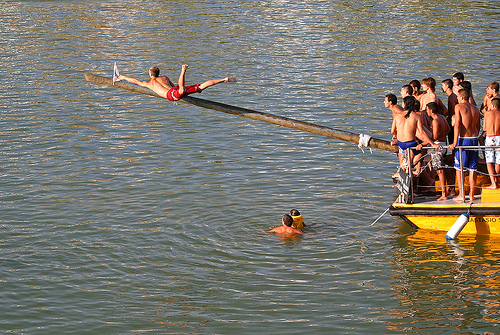
Because it is so close to the river, a competition called the cucaña is held: a barge is moored with a horizontal pole a few metres long attached to it, smeared with grease or slippery materials, so that grabbing the flag at the end becomes either a feat of acrobatics or a dunking in the river for the contestant.
Sunday is the last day of the velá; at midnight a fireworks display brings it to a close.
August
This month is very rich in festivities and evening celebrations.
- Meteor shower
Between the 9th and 10th, on the feast of San Lorenzo (Saint Lawrence), it is common to watch the famous meteor shower at night in parks or places with little or no lighting.
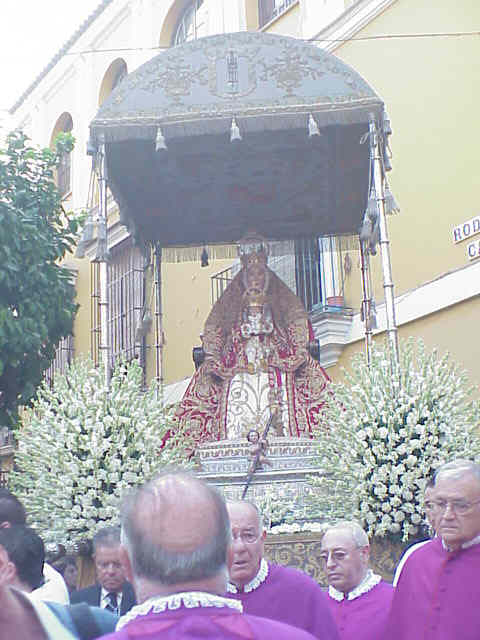
The 14th is the last day of the novena, during which the Seises dance. It is the eve of the procession of the Virgen de los Reyes, who usually presides over the Royal Chapel of the Cathedral. Beneath the Virgin is the silver urn, with inscriptions in old Castilian and Hebrew, containing the incorrupt body of San Fernando. Legend has it that before conquering the city the monarch had a dream and commissioned the carving of an image, describing the features, face and size of the image himself. A first carving was rejected; a second, to which he replied "iniesta", would later become the Virgen de la Hiniesta; and the last was named the Virgen de los Reyes. Legend says this Virgin accompanied the monarch on his triumphal entry into the city in 1248. This Virgin was the first image to be canonically crowned in Andalusia in 1904, and was proclaimed by Pius XII as Patron Saint of Seville and its Archdiocese in 1946.
- The feast of the Virgen de los Reyes
Many people come back that day or on the morning of the 15th to see the procession of the Patron Saint of Seville, as it follows a very short route around the Cathedral early in the morning.
The Virgin is a seated wooden carving, articulated at the limbs, by an anonymous artist. On her knees and between her hands she holds the image of the Infant Jesus. She is dressed by the Sisters of the Cross, with different garments and mantles that are changed every five years. She is accompanied in procession by the various civil and religious representatives of the city, who follow one another accompanying the different floats carrying various images, such as that of Saints Justa and Rufina, co-patrons of Seville, etc. Once she has returned to the Cathedral, Pontifical Mass begins.
September
- San Miguel
The last weekend of the month is taken up by the San Miguel Fair, a former livestock fair where casetas are set up as at the April Fair. There are cattle drives and livestock gatherings. Horse breeders, stud farms and cattle are exhibited. There are competitions in dressage, acoso y derribo (cattle-herding on horseback), etc.
Visit Seville
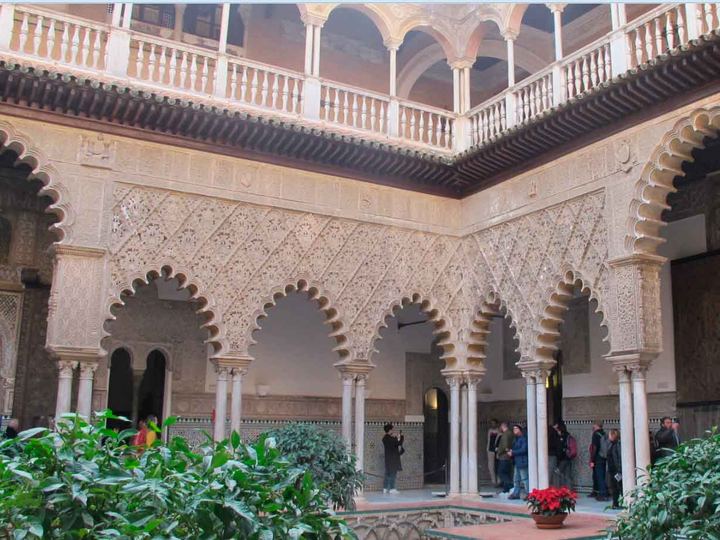
Guided tour of the Cathedral, the Giralda and the Royal Alcázar
Seville's two must-sees with the same official guide and tickets included.
from€65per person
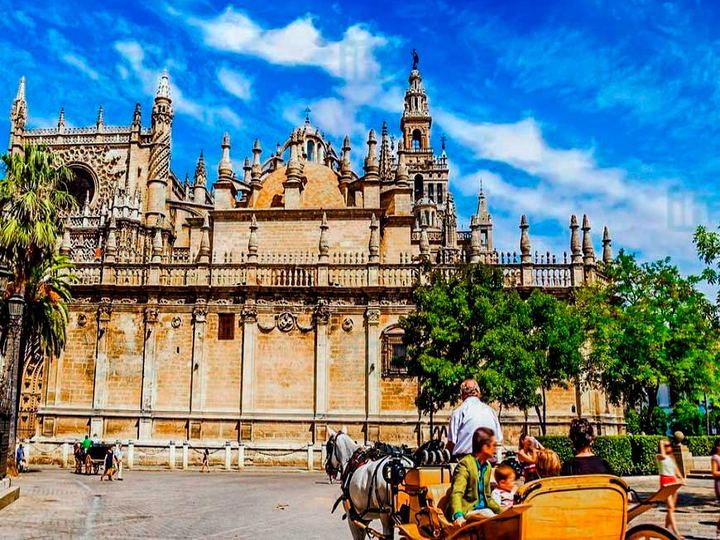
Essence of Seville: horse-drawn carriage ride
Plaza del Triunfo, Torre del Oro, María Luisa Park and Plaza de España in a horse-drawn carriage.
Free, no-obligation quote