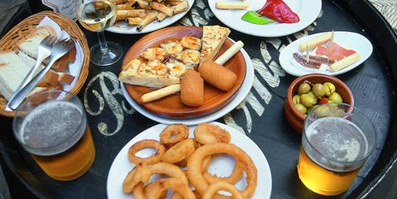
List of places to eat in Seville
Seville's cuisine
Sevillian cuisine has evolved through the internal and external influences provided and enriched over the ages by the many peoples who have lived here. Iberians, Celts, Phoenicians, Greeks, Romans, Jews, Goths and Arabs have all helped to shape the history of Sevillian cuisine as we know it. Each of them contributed practices and customs, some of which have survived to this day.
Modern cooking is mainly based on the now world-famous "Mediterranean Diet", which is nothing more than making the most of everything our excellent land and wonderful coasts have to offer.
Anyone arriving in Seville for the first time will be amazed by the wide variety of places the city has for eating or for going "tapear" (out for tapas), a custom very popular among its people.
The most characteristic feature of our cuisine is "tapas". These are small portions of food, either cold or hot, that accompany a drink and tide us over before the main meals.
Each establishment tries to offer its own original dish, so visitors can discover new flavours and seasoned products. Through these small portions you begin to get to know part of the cuisine of Seville and its province.
You can find this unique tradition anywhere in the city, whether in the historic tascas or taverns scattered all over Seville, most of which date back more than 100 years, or in the restaurants of the province, where you can also sample the typical delicacies of our land: from the magnificent cured meats and mountain products made from top-quality Iberian pigs from our province or from neighbouring Huelva, to excellent game stews such as venison caldereta, not forgetting the wonderful vegetables grown locally, which are the undisputed basis of all our dishes, such as cocido, huevos a la flamenca, gazpacho, menudo, oxtail, veal, caldereta, etc.
Nor can you leave the city without trying the fresh fish prepared by the province's restaurants in all its variety, from the famous anchovies in vinegar or fried "pescaito" to sea bass, gilt-head bream, urta, dogfish, seafood, swordfish or turbot from our nearby coasts, or the traditional marinated grey mullet (albures en adobo).
To go with all this and much more, you cannot miss our land's exquisite mosto (young wine), Seville's now international beer, served ice-cold from its brine-cooled tank, or the world-renowned finos and manzanillas from Sanlúcar.
Desserts are linked to each season of the year, such as pestiños, torrijas and piñonates at Holy Week, yemas de San Leandro, alfajores, tortas de aceite, tortas de polvorón, mantecados, bizcotelas, mostachones... convent sweets...
Here is a small sample: pavías de bacalao (battered cod), olives, tortillitas de camarones (shrimp fritters), cabrillas (large snails) in tomato sauce, caracoles (small snails), spinach with chickpeas, pringá, montaditos of ham, caña de lomo, morcón, black pudding, fried "pescaito" such as acedías (small sole), anchovies, pijotas (small hake) and sardines
Out for tapas in Seville
Sevillians are outgoing and love being out on the street and at open-air terraces. It is no surprise that the streets have more tapas bars than restaurants.
Unlike in northern Spain, where meals are heavier and portions larger, in the south people eat less and have lighter meals. Instead of a full meal, people often "pick at" a few tapas or a ración (a larger sharing plate). What's more, the pace of life is more relaxed and eating out is a daily social activity, not reserved just for weekends.
Try to discover what Sevillians eat and how they do it. If you miss the food from home or want to try something different, we give you a few tips on where to look.
Remember that mealtimes are different in Spain. Lunch is between 14:00 and 15:00 or even later, and dinner from 21:00 onwards.
Tapas
Sevillians go out for tapas in the evening as an alternative to a sit-down dinner in a restaurant, and also at midday for lunch.
Tapas are small amounts of any kind of Andalusian food, and people usually have one tapa with each drink. Sometimes people order a ración to share and everyone picks from the plates in the middle of the table. To drink, people usually have beer, most often Cruzcampo.
This beer brand, created in Seville in 1904, has become the leading beer brand in Spain. Another typical drink is tinto de verano, which is red wine mixed with gaseosa (a lemonade-type soft drink similar to Seven Up), or with orange or lemon soda.
To eat tapas, people can sit down or stand at the bar or at high tables. The list of tapas on offer is usually written on a blackboard, but in some bars the waiters recite the whole list from memory (which makes it a little hard to remember them all). The easiest thing is to ask for "la carta", the tapas menu. Some bars have their tapas translated into English.
A list of the most common tapas:
- Pinchitos morunos: A typical Andalusian dish inherited from Arab cuisine. It is made of pieces of pork or chicken marinated with various spices.
- "Montaditos": Small toasted sandwiches with various fillings (serrano ham, anchovies, chorizo, prawns, etc.).
- Gazpacho: A typical Sevillian and Andalusian dish known worldwide. It is usually eaten in summer and served as a starter. It is a cold soup made of tomato, cucumber, pepper, garlic, bread, olive oil, salt and vinegar. Salmorejo is the same, but without water.
- Pescado frito: Fried fish, whole or cut into pieces, dusted in flour and fried: anchovies, pijotas, squid and puntillitas (baby squid), among others. A good way to try it is to order a "frito variado", which has a bit of everything.
- Espinacas con garbanzos: A traditional Sevillian dish of spinach and chickpeas. The spinach is flavoured with fried bread, garlic, cumin and bay leaves, with salt and paprika.
- Menudo: Made from veal tripe. In the rest of Spain it is called "callos". It is a hearty, filling stew, sometimes spicy and, contrary to appearances, not too fatty. It can be cooked with chickpeas, chorizo, black pudding, etc.
- Huevos a la flamenca: The dish is made of vegetables (tomato, red peppers, peas, green beans, onions and garlic), cured meats (a mix of serrano ham and chorizo) and egg. It is baked in an earthenware dish.
- Tortillitas de bacalao: Made of desalted salt cod cut into strips, mixed with garlic, onions and parsley, then battered and fried.
- Ensaladilla: Potato salad with boiled egg, tuna, peas and mayonnaise.
pages: 1 2
Visit Seville
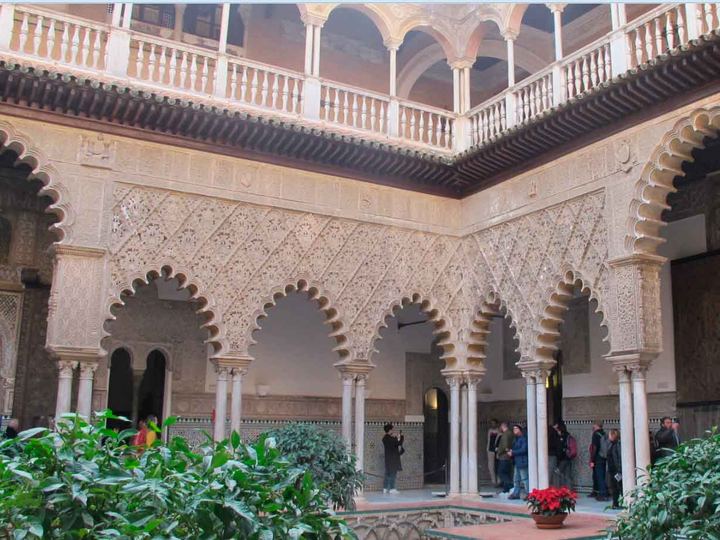
Guided tour of the Cathedral, the Giralda and the Royal Alcázar
Seville's two must-sees with the same official guide and tickets included.
from€65per person
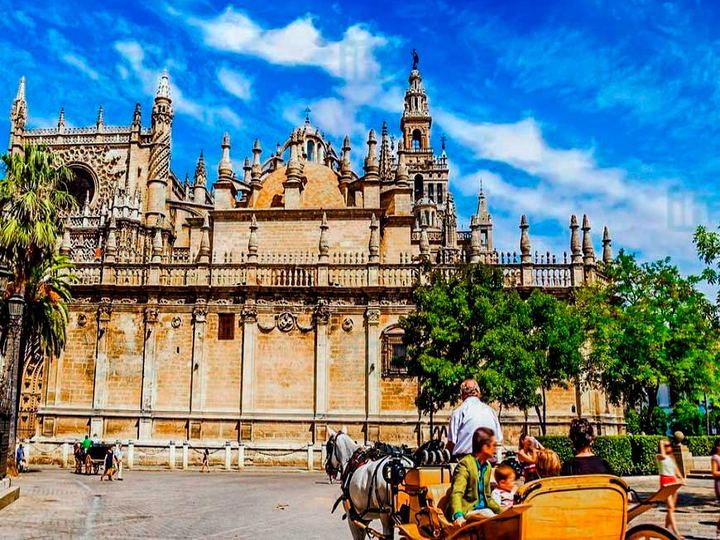
Essence of Seville: horse-drawn carriage ride
Plaza del Triunfo, Torre del Oro, María Luisa Park and Plaza de España in a horse-drawn carriage.
Free, no-obligation quote