The city of Seville
Its historic centre is one of the largest in Europe, at approximately 335 ha, some three kilometres long by two wide. Its historic and monumental heritage and its many performing arts and cultural venues make it a destination for national and international tourism. Among its most representative monuments are the Giralda, the Cathedral, the Alcázar, the Archive of the Indies and the Torre del Oro. Some of these monuments were declared World Heritage Sites by UNESCO in 1987. Seville's Museum of Fine Arts is the most visited museum in Andalusia and the second most important art gallery in Spain.
Despite being some 80 km from the Atlantic Ocean, the River Guadalquivir is navigable from its mouth at Sanlúcar de Barrameda up to Seville, although the size of the ships that can reach Seville is limited by the river's navigability. Seville has a well-developed road and rail network, as well as an international airport. The historical presence of the aeronautical industry in the city is noteworthy, as are its shipyards and military industry.
On the occasion of the 1929 Ibero-American Exposition, the city underwent major urban development marked by the construction of parks and buildings designed for the event, such as María Luisa Park and the Plaza de España. The 1992 Universal Exposition left the city a legacy of greatly improved infrastructure, mainly in rail (AVE), air and road communications. In addition, new technology companies and university centres have been established on the former Expo grounds.
Major projects are currently under way in the city, such as the Torre Cajasol, the Metropol Parasol in La Encarnación, the Seville metro, the Puerto Delicias project and the Nuevo Mundo Aquarium.
The University of Seville, with more than 55,000 students, is one of the largest in Spain. In addition, the Pablo de Olavide University (located in the neighbouring municipality of Dos Hermanas) has more than 10,000, and thousands of foreign students enrol in Erasmus programmes and Spanish courses.
Visit Seville
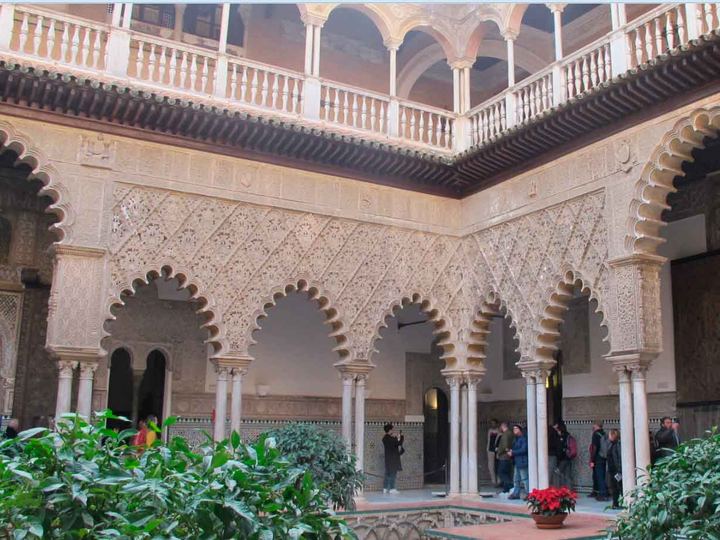
Guided tour of the Cathedral, the Giralda and the Royal Alcázar
Seville's two must-sees with the same official guide and tickets included.
from€65per person
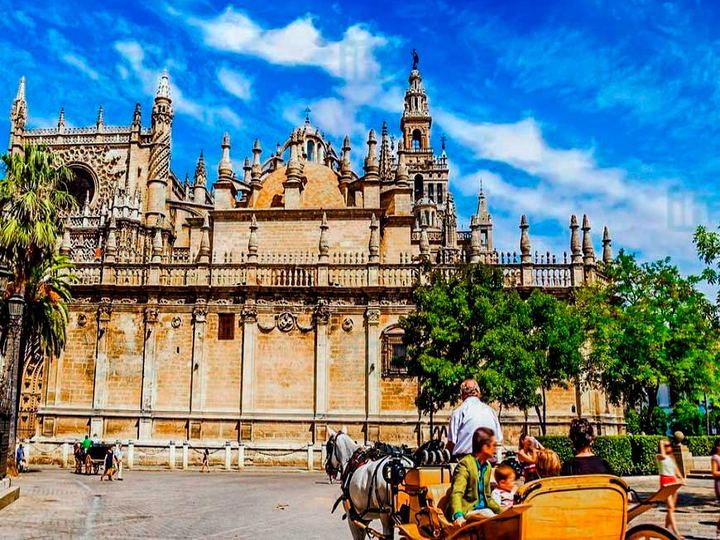
Essence of Seville: horse-drawn carriage ride
Plaza del Triunfo, Torre del Oro, María Luisa Park and Plaza de España in a horse-drawn carriage.
Free, no-obligation quote