Gastronomy - Eating in Seville
Wine in Seville
The prestige of its wines is the fruit of a long winemaking tradition of years of ageing a wide variety of wines. Finos, amontillados, olorosos, sweet wines...
Montilla-Moriles wine is the result of a long evolution, the fruit of a complex, age-old creative process, the final achievement of centuries of work. The finest wines of this designation come from vineyards on the rolling chalky soils of the Sierra de Montilla and Moriles Alto, that is, from the select albariza or albero plots.
Between August and September, starting the season in Spain, the ancestral ritual of the grape harvest begins in the Montilla-Moriles area; the high summer temperatures of the countryside speed up the ripening of the grapes. By the end of August, the Pedro Ximénez grapes are usually golden, with translucent skins, like pearls.
Alongside the Pedro Ximénez variety there are also the Airén, Montepila, Baladí and Moscatel varieties (although in recent years red varieties are being experimented with).
In the old and modern process of pressing the grapes, once ripe, the grapes are carefully transported from the vineyards to the presses. There, using modern methods, the bunches are crushed, and the resulting free-run must is separated from the must later obtained by pressing, to be used for producing the finest wines.
In the traditional method, fermentation takes place in cement cones. Fermentation turns the must into wine through a chemical and biological process caused by the activity of yeasts, in which the sugars in the must are converted into alcohol and carbon dioxide, along with other chemical reactions and various microbial activities.
Today fermentation takes place in temperature-controlled stainless steel vats. For a Montilla-Moriles wine to age properly, it needs several factors: breeding, that is, the right origin; a home, the winery; and a good room, the butt or cask.
Pedro Ximénez takes its name from the grape variety it comes from, which is mainly characterised by its delicate skin and high sugar content, reaching 14º-15º when ripe. Once picked at full ripeness, the grapes are laid out in the sun to turn into raisins. After several days, once the raisins have been processed, the end result is a wine of 22º Baumé and 9º alcohol. Thanks to its fruity, pleasant flavour, it can be enjoyed as a dessert. Available aged or unaged.
pages: 1 2
Visit Seville
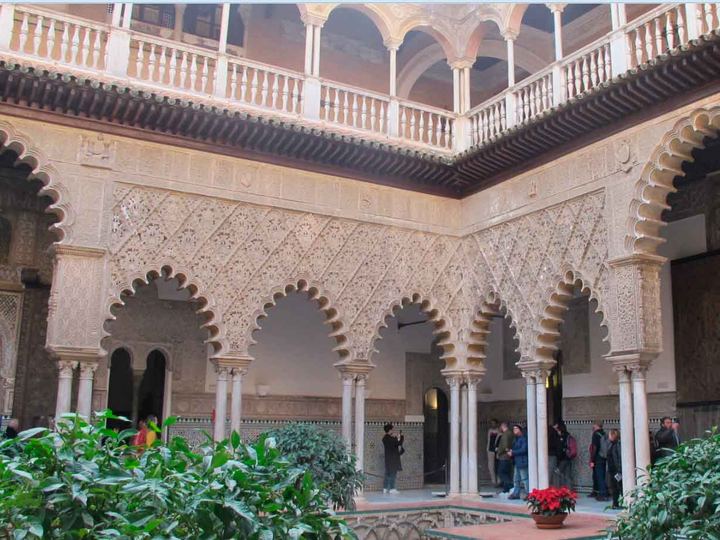
Guided tour of the Cathedral, the Giralda and the Royal Alcázar
Seville's two must-sees with the same official guide and tickets included.
from€65per person
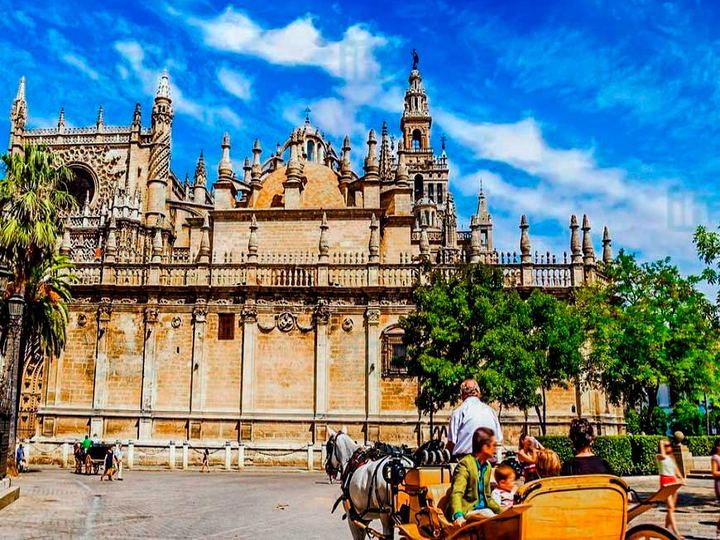
Essence of Seville: horse-drawn carriage ride
Plaza del Triunfo, Torre del Oro, María Luisa Park and Plaza de España in a horse-drawn carriage.
Free, no-obligation quote