8.- Seville, 1929 and 1992.
In short, a modern Seville did not begin to emerge until the 20th century. The 1929 exposition and the 1992 Universal Exposition served as a platform that brought Seville fame and launched it worldwide as a city that is both modern and steeped in tradition. In Seville, the 20th century was the century of modernisation: the Santa Cruz quarter was restored, the Nervión district was planned and built, the Avenida de La Palmera was laid out and the María Luisa Gardens were landscaped.
However, despite this promising start, after the 1929 Ibero-American Exposition the Civil War and the long post-war period marked by the regime of the dictator Francisco Franco once again left Seville clearly lagging behind.
In 1992, with democracy restored, the Universal Exposition of Seville was held. Thanks to this event, the city of Seville has benefited in recent years from large-scale initiatives promoted both by the various public administrations and by the private sector. These include major investment in transport and communications infrastructure; the restoration of the historic centre; an increase in hotel capacity; the construction of new cultural, sports and shopping venues; the recovery of the river and the port facilities; and the improvement of the road network with new ring roads and avenues, among others.
Visit Seville
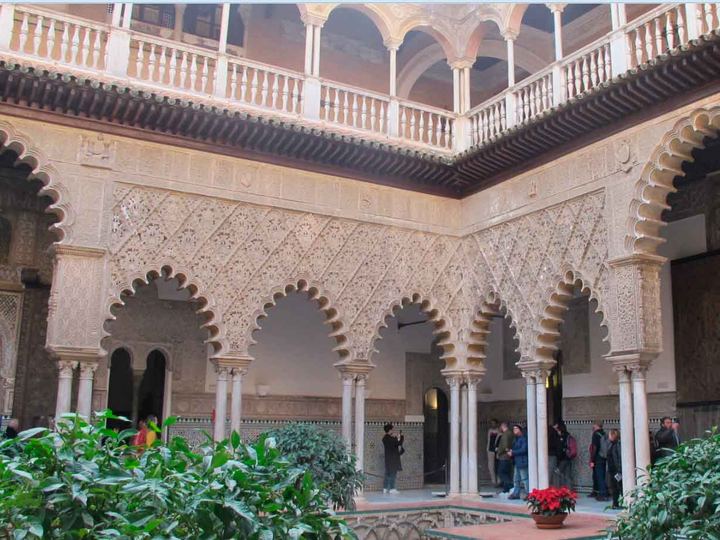
Guided tour of the Cathedral, the Giralda and the Royal Alcázar
Seville's two must-sees with the same official guide and tickets included.
from€65per person
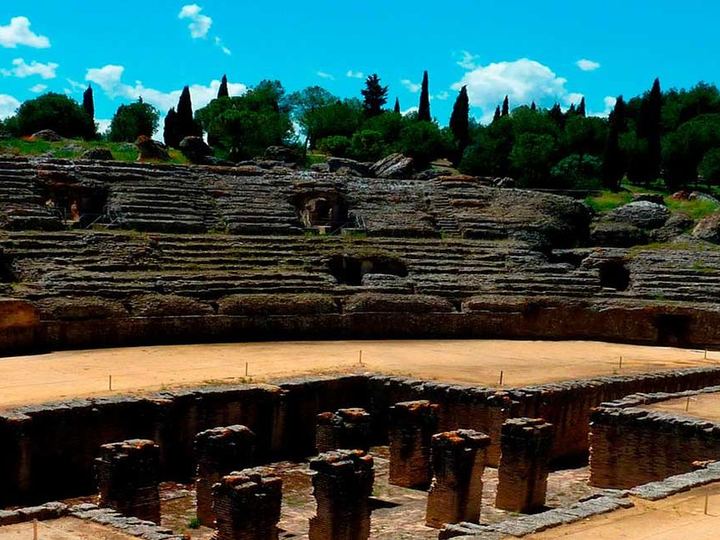
Guided tour of Itálica
The first Roman city in Hispania: amphitheatre, mosaics, baths and theatre. With or without a bus from Seville.
from€21per person