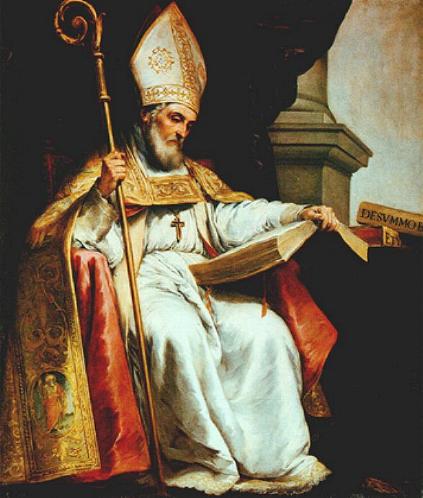
Spali, Visigothic Seville.
These peoples did not leave the region until AD 429; however, they were soon replaced by the Suebi, led by Rechila. The city managed to recover from these invasions until the Visigoths arrived in the mid-6th century. Hispalis then became known as Spali.
Of greater significance was the period of Visigothic rule in which Amalaric chose Spali as capital of the Visigothic kingdom, a status it kept until Athanagild came to power and moved the capital to Toledo. Struggles over power and religion between Arians and Christians went on for years. Around AD 573 the Christian prince Hermenegild rebelled against his Arian father Leovigild, a rebellion that led to his defeat and death in AD 583 and to the capture of the city by Leovigild.
From then on, the city's splendour was mainly cultural, thanks to the work of the bishops Saint Leander (who promoted national unity by bringing about the conversion of King Reccared at the Third Council of Toledo, AD 589) and Saint Isidore (author of the Etymologies, a great encyclopaedia summarising the knowledge of his time and a work of enormous influence on European culture).
In this turbulent period in the history of Seville, the figure of King Reccared stands out; during his reign the city enjoyed a splendid cultural boom. The walls were extended, new districts were created and palaces and churches were built.
Visit Seville
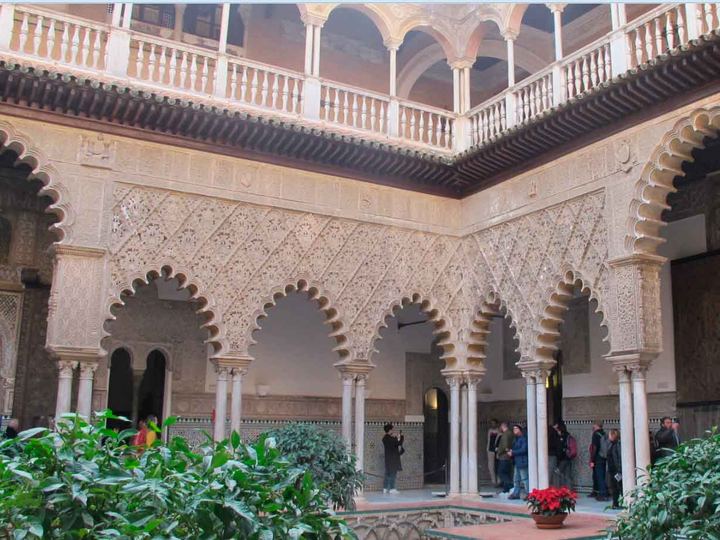
Guided tour of the Cathedral, the Giralda and the Royal Alcázar
Seville's two must-sees with the same official guide and tickets included.
from€65per person
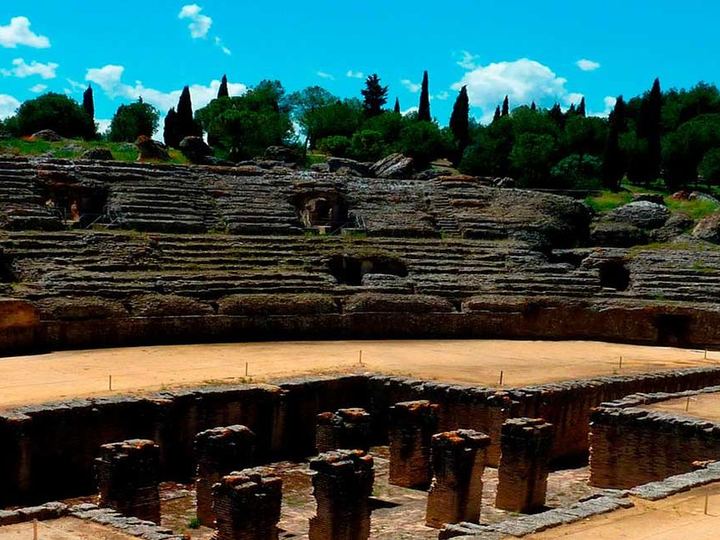
Guided tour of Itálica
The first Roman city in Hispania: amphitheatre, mosaics, baths and theatre. With or without a bus from Seville.
from€21per person